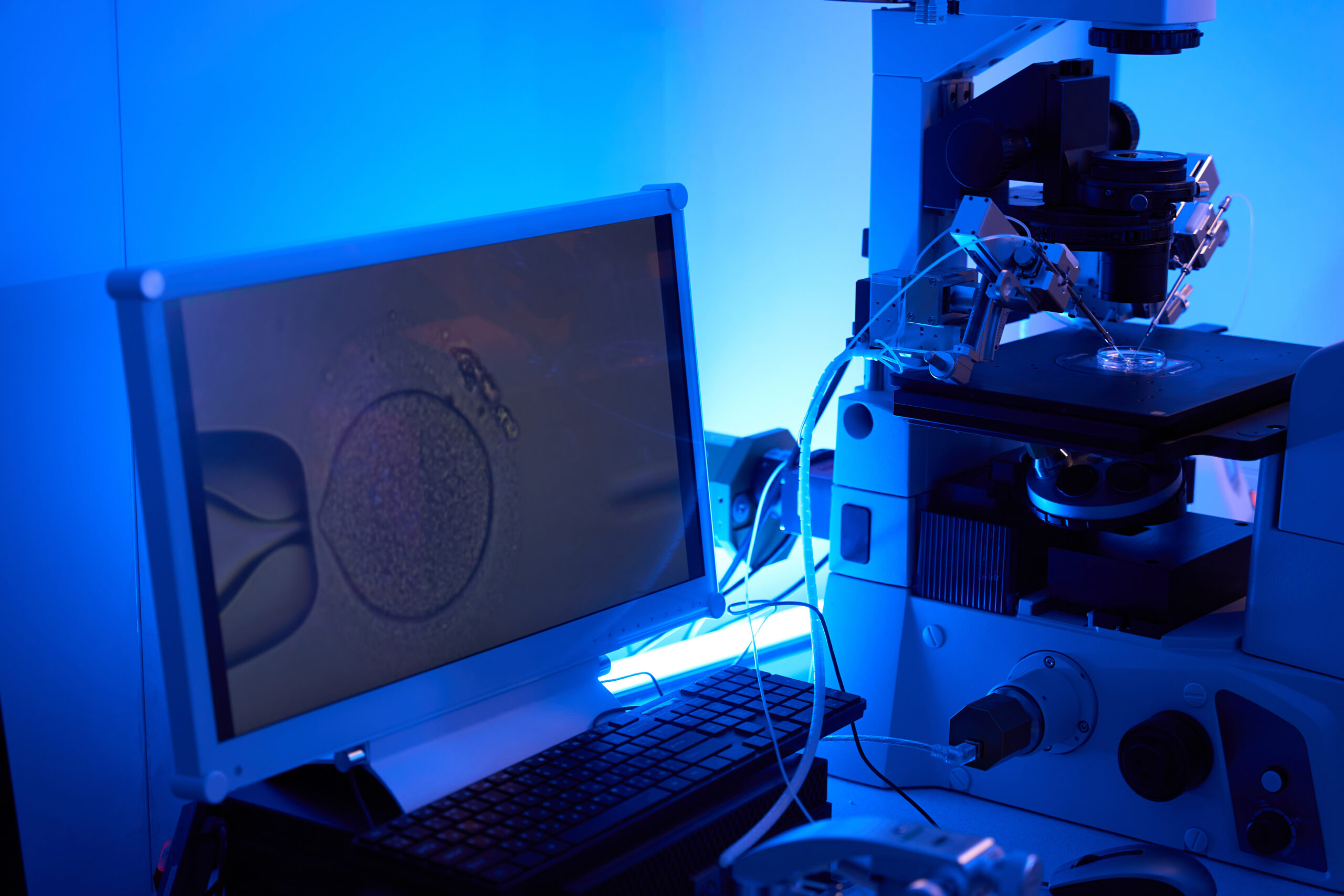
In vitro fertilization gets a boost as the U.S. Food and Drug Administration clears the first AI tool designed to assist with embryo selection.
Embryo Predict, developed by Alife Health, is an AI tool that supports embryo selection in IVF clinics by providing embryologists with assistance during one of the most significant moments in a patient’s journey.
“As the field of reproductive medicine advances, we have a responsibility to bring the most rigorous, evidence-based tools into our labs. Alife’s Embryo Predict does exactly that,” said Alison Bartolucci, chief scientific officer at First Fertility, in a statement. “It layers AI-driven insight onto the clinical expertise already in the room, giving embryologists adjunctive AI information for one of the most consequential decisions in a patient’s IVF journey.”
Melissa Teran, the CEO and co-founder of Alife Health, said the FDA’s clearance comes after six years of “rigorous” research. She also noted that it’s a big step in the workflow of many embryologists.
“Six years ago, we set out to put IVF’s wealth of clinical data to work in a way the field had never seen before. Today, that work is validated,” Teran said. “This clearance reflects years of rigorous clinical research and the trust of the clinicians and institutions who partnered with us. For the first time, the collective insight from thousands of embryos and outcomes around the world is available to every embryologist, at every transfer decision.”
AI’s New Role In One Of IVF’s Toughest Decisions
Embryo selection remains an important step during an IVF journey with no national standard or protocol governing it. The process varies across clinics, laboratories and individual embryologists.
Most fertility centers rely on trained embryologists to assess embryo quality by evaluating visual characteristics and developmental timing under a microscope. While some clinics use time-lapse imaging systems, interpretation still largely depends on human judgment. Differences in clinical judgment between embryologists can impact outcomes.
Alife Health says Embryo Predict reduces variability in embryo selection. With the tool, embryologists upload embryo images within day five to seven of development. The system then analyzes morphological features and developmental patterns to generate a score for selection decisions. It also creates a report for clinicians to share with their patients.
What The Evidence Shows
Several prominent AI tools have received FDA approval for use in IVF over the past few years. While researchers continue to evaluate their effect on patient outcomes, these technologies have already transformed day-to-day operations in IVF laboratories.
Evidence suggests AI can help clinicians make more informed decisions throughout a patient’s journey. Researchers also have consistently found AI assistance improves accuracy. One study found that AI improved embryo selection accuracy across all experience levels. Intermediate embryologists saw a 12% improvement, while junior embryologists achieved the largest gain at 14.1%. Senior embryologists experienced a more modest improvement of 8.7%.
A separate study in South Korea found an even larger effect. Researchers surveyed 61 embryologists with varying levels of experience. Those who received an AI-generated score before making their selection achieved 50% accuracy, compared with 38% for those working without AI assistance.
The Real Question Isn’t Whether AI Will Replace Embryologists
Embryologists play a core role in fertility treatments. But the profession involves highly demanding, time-sensitive, and emotionally taxing work.
Demand for clinical embryologists continues to grow as fertility services become more accessible. This has largely been driven by expanded insurance coverage and shifting family-planning trends.
Yet many laboratory scientists work long and irregular hours, including weekends and holidays. They also face persistent concerns about staffing, burnout and workplace conditions.
The emotional burden of the role often goes unnoticed. Emma Whitney, director of embryology and genetics at the U.K. fertility clinic Evewell, wrote about these behind-the-scenes pressures embryologists face.
“Embryologists work under some of the highest level of pressure and anxiety of any job I can think of. They do this, so often, in basements, with little respite,” Whitney wrote. “Mistakes for them can be life altering for others and catastrophic for their careers.”
Replacing embryologists with AI isn’t the ultimate goal for the new tools. Instead, developers are working to position AI as a resource for reducing stress and pressure associated with the role. The tools could help decrease cognitive burden and improve consistency. They could also allow embryologists to focus on more complex cases that require human judgment and expertise.
Other AI-Powered Tools Are Seeking To Transform Fertility Workflow
While Alife Health’s Embryo Predict became the first FDA-cleared tool for embryo assessment, it is not the first AI tool in this space.
Multiple AI tools have launched and received FDA clearance for ferlitiy clinic workflow. These tools mainly integrate with time-lapse imaging systems and microscopes used by these clinics. The landscape of reproductive medicine is steadily shifting toward data-driven automation as platforms gain pathways for commercial use.
CHLOE EQ by Fairtility
CHLOE EQ is an AI assistant that evaluates embryo development.
The platform analyzes images of embryos grown in a time-lapse incubator. It evaluates growth patterns over time, cell divisions, morphological features and biomarkers.
The AI tool also generates reports on developmental milestones and integrates them into clinic management systems and electronic health records.
iDAScore by Vitrolife
IDAScore is an AI tool that helps embryologists analyze video sequences of developing embryos.
The automated software evaluates continuous growth data, including the precise timing of cell divisions and visual changes over several days. It then uses this information to predict an embryo’s likelihood of reaching a successful pregnancy.
The Vitrolife developers also have companion analysis tools integrated the system to help clinics manage data and improve patient workflows.
Life Whisperer
Life Whisperer Viability is an AI tool embryologists can use to analyze static microscope images of Day 5 embryos.
The cloud-based software evaluates subtle morphological data to predict an embryo’s likelihood of successful clinical pregnancy through standardized ranking.
The automated software evaluates continuous growth data, including the precise timing of cell divisions and visual changes over several days. It uses this information to predict an embryo’s likelihood of reaching a successful pregnancy.