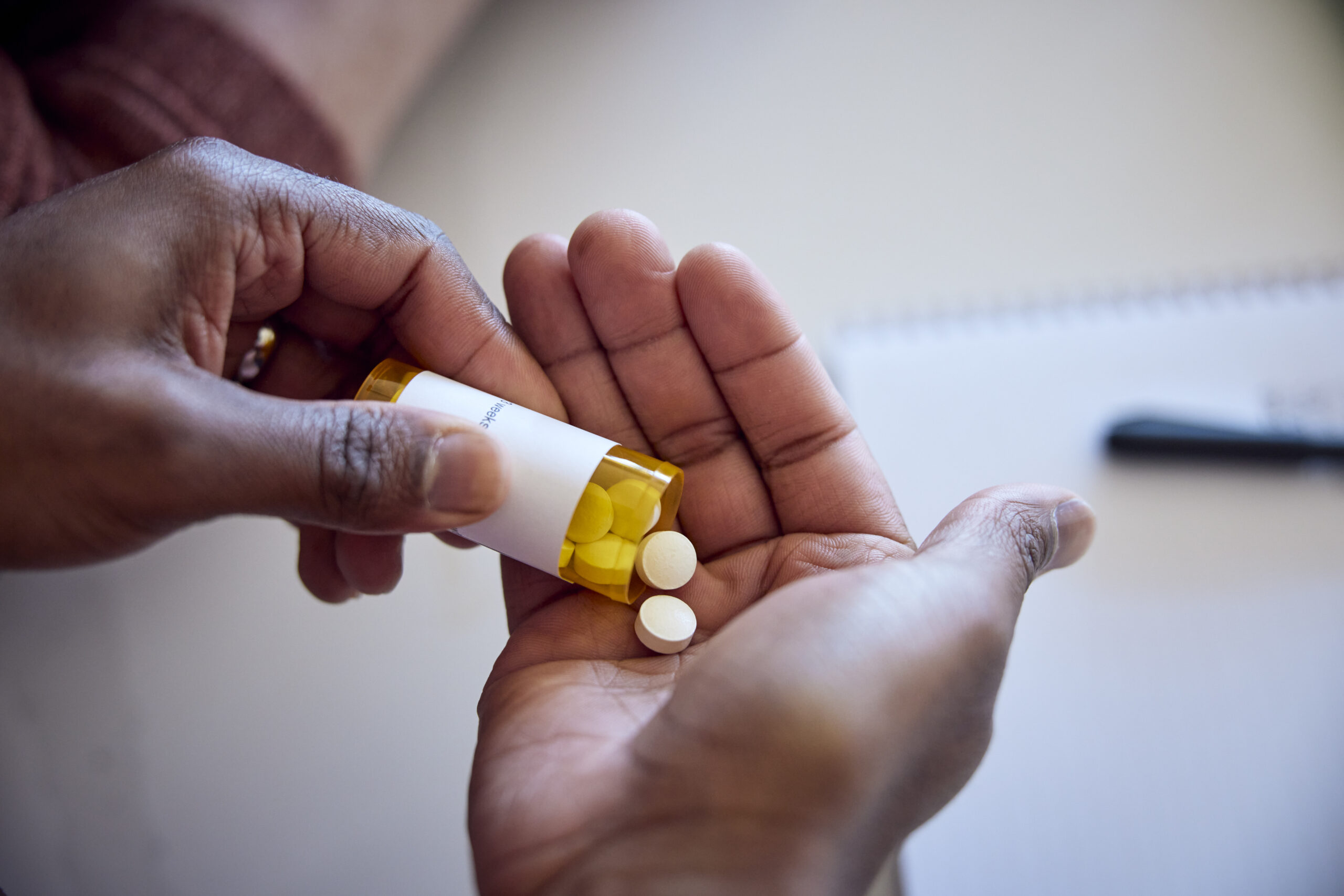
Inventia Healthcare initiated a voluntary recall of 11,460 bottles of chlorthalidone 25 mg on June 5 after the tablets failed dissolution testing. Then, on Monday, June 22, the Food and Drug Administration classified it Class II.
Chlorthalidone is the second blood pressure medication that health officials pulled in a single month for the same defect. Back in May, Ascend Laboratories recalled 15,696 bottles of amlodipine and olmesartan for failing the same test. Both drugs were manufactured in India.
Why Did Chlorthalidone Fail Dissolution Testing
Neither Inventia nor Rising Pharma shared what went wrong with the testing, and the FDA’s enforcement report lists only the test result. The only thing that people know for sure is the drug is vulnerable to that kind of failure.
Chlorthalidone is poorly soluble in water, so its tablets depend heavily on the formulation, the disintegrants, binders and manufacturing process to release the drug on schedule. When any part of that system drifts, the tablet can fail to break down properly even when the active ingredient is present in the right amount.
That failure is what dissolution testing detects by measuring how reliably a tablet breaks down and releases its active ingredient after swallowing. Under normal conditions, chlorthalidone reaches about 65% bioavailability with each dose.
When a tablet fails to dissolve as intended, the dosing consistency is unknown. A patient could absorb nearly the full 65% dose one day and significantly less the next. Then, neither the patient nor the prescriber can determine how much medication went into their system, making treatment unpredictable. For a drug used to control blood pressure, that uncertainty poses a serious risk.
What Should Clinicians Do?
Clinicians should check prescription records against the recalled lot numbers and cross-reference them with their pharmacy’s inventory to identify affected patients. For anyone on a recalled batch, consider switching them to an unaffected lot or an alternative diuretic.
Doctors shouldn’t direct patients to stop abruptly. The American Heart Association warned that sudden withdrawal of antihypertensives carries real cardiovascular risk.
Medical professionals should also pay closest attention to patients who seemed resistant to the medication. If their pressure ran high on what appeared to be adequate chlorthalidone, the cause may have been the tablet, and a working formulation may control them without an added agent.
Patients should contact their pharmacist or physician immediately to find out whether the FDA recalled their bottle.
What’s At Stake For Black Patients?
According to the Centers for Disease and Control, roughly 58% of Black adults have high blood pressure, the highest rate of any racial group. Hypertension accounts for roughly half the mortality gap between Black and White Americans, who are five times more likely to die from it.
Black people also tend to die of hemorrhagic stroke at 10.95 per 100,000, nearly double the white rate of 5.86. At 55, their stroke mortality is three times higher.
A defective tablet looks identical to a working one, and an underdosed patient feels fine until the pressure climbs. For a population already at elevated stroke risk, weeks of unknowingly subtherapeutic dosing is the exact mechanism that turns a manageable condition into a fatal one.
For clinicians with large Black patient panels, the recall is not routine administrative cleanup. It is a direct line between a manufacturing failure and a population that can least afford it.
This article is for clinical information only and does not constitute medical advice. Clinicians should exercise independent judgment and consult appropriate resources before making treatment decisions.
Frequently Asked Questions
What is a Class II recall? The FDA classifies recalls by severity. Class II means the recalled product could cause temporary or medically reversible adverse health effects, but not permanent harm or death. It’s serious enough to pull from shelves, but not an emergency.
I prescribed Chlorthalidone 25 mg. How do I know if my patients got the bad batch? Check your prescription records for fill dates between now and April 2027. Cross-reference with your pharmacy’s inventory records to see if they stocked batches RISA24001 or RISB24002. Your pharmacy should have this information readily available.
Can I just switch my patients to a different diuretic? Hydrochlorothiazide and indapamide are the alternatives in this drug class that health professionals talk about most. Some clinicians also choose to stay with chlorthalidone once the pharmacy confirms an unaffected batch. Whatever the decision, documenting the recall and the medication change creates a clear record.
How does chlorthalidone compare to hydrochlorothiazide? Both are diuretics that doctors use to treat hypertension. Chlorthalidone is a thiazide-like diuretic with a longer half-life, typically dosed once daily. Hydrochlorothiazide (HCTZ) is a thiazide diuretic often dosed twice daily. Chlorthalidone is generally more potent at lowering blood pressure. However, both carry similar metabolic side effects: hypokalemia, hyperglycemia, and hyperuricemia.
What if my patient’s blood pressure is already controlled? If they’re well-controlled on the recalled batch, then they’ve been fortunate. Still contact them to switch as a precaution.
Is there a lawsuit? As of June 24, 2026, there is no documented record of one. Inventia Healthcare Limited initiated the recall voluntarily, which can limit liability exposure. But, clinicians should document everything: when they discovered the recall, which patients were affected, when and how they contacted them, and what medication change they made. This protects them and the patient.
Will this happen again? No one can say for certain. But this is the second blood pressure medication recalled in a single month for the same dissolution failure, and both drugs were manufactured overseas. The pattern points to a broader vulnerability in generic supply chain quality control rather than a one-off defect.