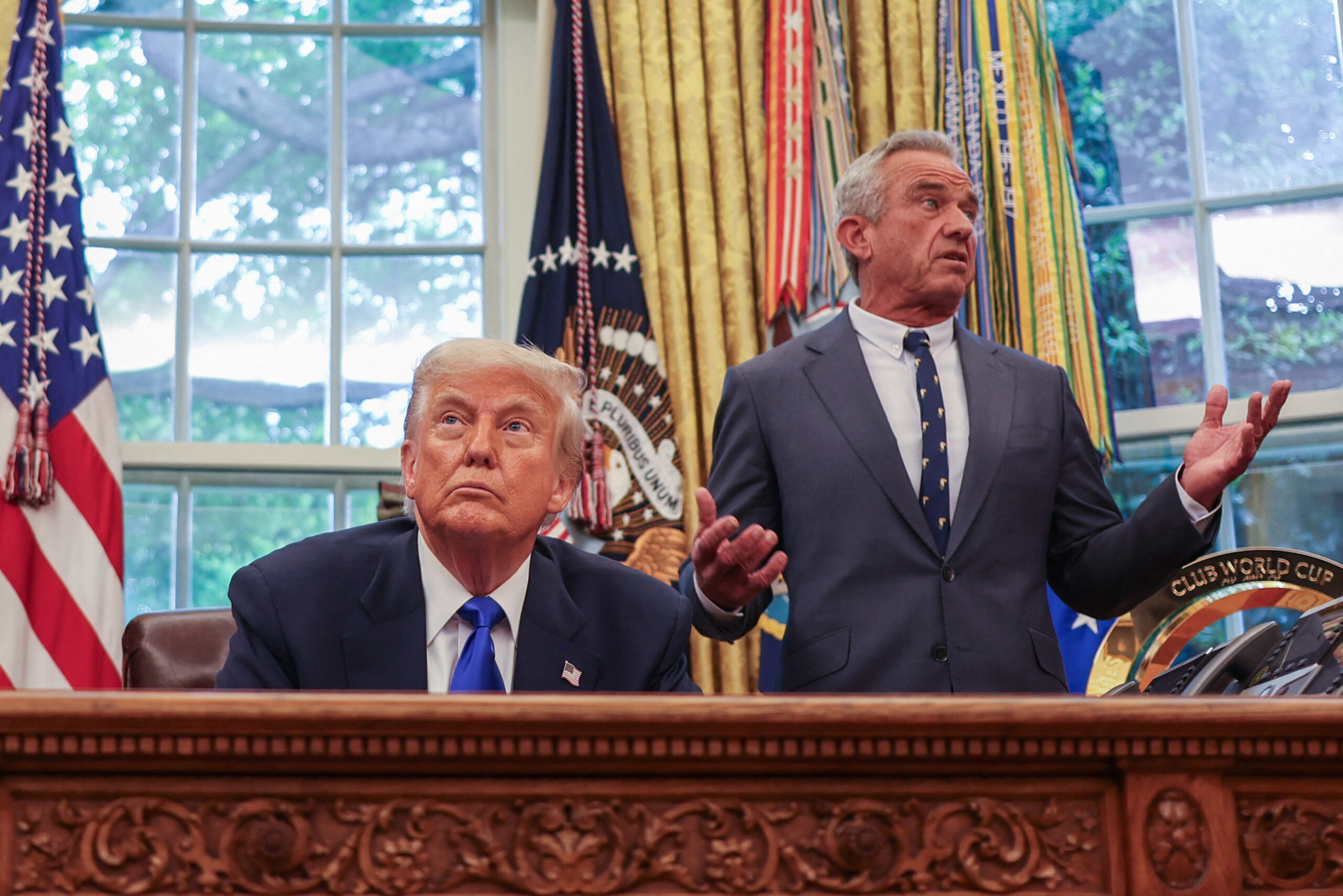
Federal leadership for the nation’s top health agencies is changing as the administration shifts focus to the “Make America Healthy Again” initiative.
As President Donald Trump and the Department of Health and Human Services Secretary Robert F. Kennedy Jr. attempt to stabilize the nation’s top agencies, several key leadership appointments have been announced. These changes offer a window into how federal resources may shape clinical research, investments and expectations going forward.
The administration is reshaping research funding and medical guidance by leveraging a diverse mix of traditional policy veterans, media commentators and free-market economists. These changes could affecting everything from vaccine guidance to how billions in federal research dollars are allocated.
Below are some of the recent appointments and shakeups that may change the course of the nation’s healthcare industry.
Dr. Erica Schwartz’s On The Verge Of Making CDC History
On April 16, President Trump officially announced on Truth Social that he was nominating Dr. Erica Schwartz, a retired rear admiral, to lead the Centers for Disease Control and Prevention. If confirmed, she would become the first Black leader permanently appointed to head the agency.
The high-stakes nomination comes at a critical moment. The CDC has cycled through four directors in a single year, fueling political instability at the agency. At the same time, RFK Jr. continues to push changes to vaccine oversight and federal health guidance.
Unlike figures more closely aligned with RFK Jr.’s anti-vaccine views, Dr. Schwartz brings a traditional public health background. Throughout her career, she has emphasized evidence-based public health policy and led the federal government’s pandemic drive-through testing program. She also supported HHS’s transition into the Biden administration.
Years later after working as the deputy surgeon general during the president’s first term, Dr. Schwartz is potentially returning the “gold standard of science” to the world. This signals a return to the CDC’s original focus on evidence-based disease prevention and response.
Her success in the role may depend on whether she can rebuild public trust and restore scientific credibility as the administration pushes a more contrarian approach to federal health policy.
Until the Senate confirms a new director, Dr. Jay Bhattacharya remains acting CDC director, while also serving as director of the National Institutes of Health.
He has faced criticism for delaying and ultimately canceling a scheduled CDC publication, cutting mRNA vaccine research funding, ending subcontracting with foreign researchers, removing DEI requirements from scientific grants, and capping institutional indirect costs.
“Make American Healthy Again” Finds New Voice With Surgeon General Appointment
A board-certified radiologist and longtime Fox News medical contributor, Dr. Nicole Saphier has been nominated by President Trump for surgeon general. Her selection follows weeks of uncertainty around the administration’s earlier pick.
The previous nominee, wellness influencer Dr. Casey Means, drew bipartisan critique over her qualifications and public health positions. Her nomination ultimately failed to secure enough Senate support.
Dr. Saphier serves as director of breast imaging at Memorial Sloan Kettering Cancer Center’s Monmouth. She also holds a faculty appointment as associate professor of radiology at Weill Cornell Medical College. Long before the “Make America Healthy Again” initiative gained political traction, Dr. Saphier published a 2020 book of the same name, focusing on analyzing the government’s implication in promoting chronic disease prevention, ultra-processed foods, and food additives, and reduced physical activity. She also has a line of herbal supplements and oils marketed under the brand Drop Rx.
Dr. Saphier supports standard childhood immunizations, but she has raised questions about certain elements of the vaccine schedule. She has specifically questioned the need for universal school mandates for the hepatitis B vaccine. Her public comments have often emphasized parental choice and opposition to mandates.
Her approach echos Trump’s critique of federal health “mandates,” as a “disaster,” though this second term has leaned heavily on executive mandates to force through policy priorities.
If confirmed, Dr. Saphier would be the first radiologist to hold the Surgeon General position. Proponents anticipate her leadership to emphasis medical technology and innovation.
She would succeed acting Surgeon General Admiral Denise Hinton, a nurse and longtime public health official. The Senate has never confirmed a nurse as permanent surgeon general. However, several nurses have held the role in an acting capacity.
HHS Economist Appointment Pushes Agency Toward Economic Reform
The administration has appointed economist Dr. Casey B. Mulligan as chief economist and chief regulatory officer at the Department of Health and Human Services. His appointment gives him broad influence over economic analysis, regulatory policy, and health care spending decisions across HHS.
Dr. Mulligan is a University of Chicago economist and a former member of President Trump’s Council of Economic Advisers. He also served as White House chief economist from 2018 to 2019 during the president’s first administration.
Dr. Mulligan’s academic work frequently argues that federal regulations stifle competition and drive up consumer costs. This approach is inline with the administration, which has increasingly critiqued the current health institutions and funding structure.
The White House released a budget proposal to establish the Administration for a Healthy America. The plan requests $111.1 billion in discretionary funding for HHS, focused primarily on the “Make America Healthy Again” agenda.
The administration also proposed significant cuts to HHS programs, including $5 billion in reductions to the National Institutes of Health. The White House criticized the agency’s research portfolio, calling it “risky research” and accusing it of promoting “dangerous ideologies” that undermine public health.
This is not the first time the administration has poposed HHS budget cuts. In January, Congress rejected the prior year’s proposed cuts, instead increasing the HHS budget by $33 billion.
Given Dr. Mulligan’s close alignment with Trump’s economic policies, his priorities should track closely with the proposed budget. That would put certain programs and agencies, such as the National Institutes of Health, the Agency for Healthcare Research and Quality, and the Administration for Strategic Preparedness and Response, under scrutiny. Health equity-focused initiatives could also face heightened review.