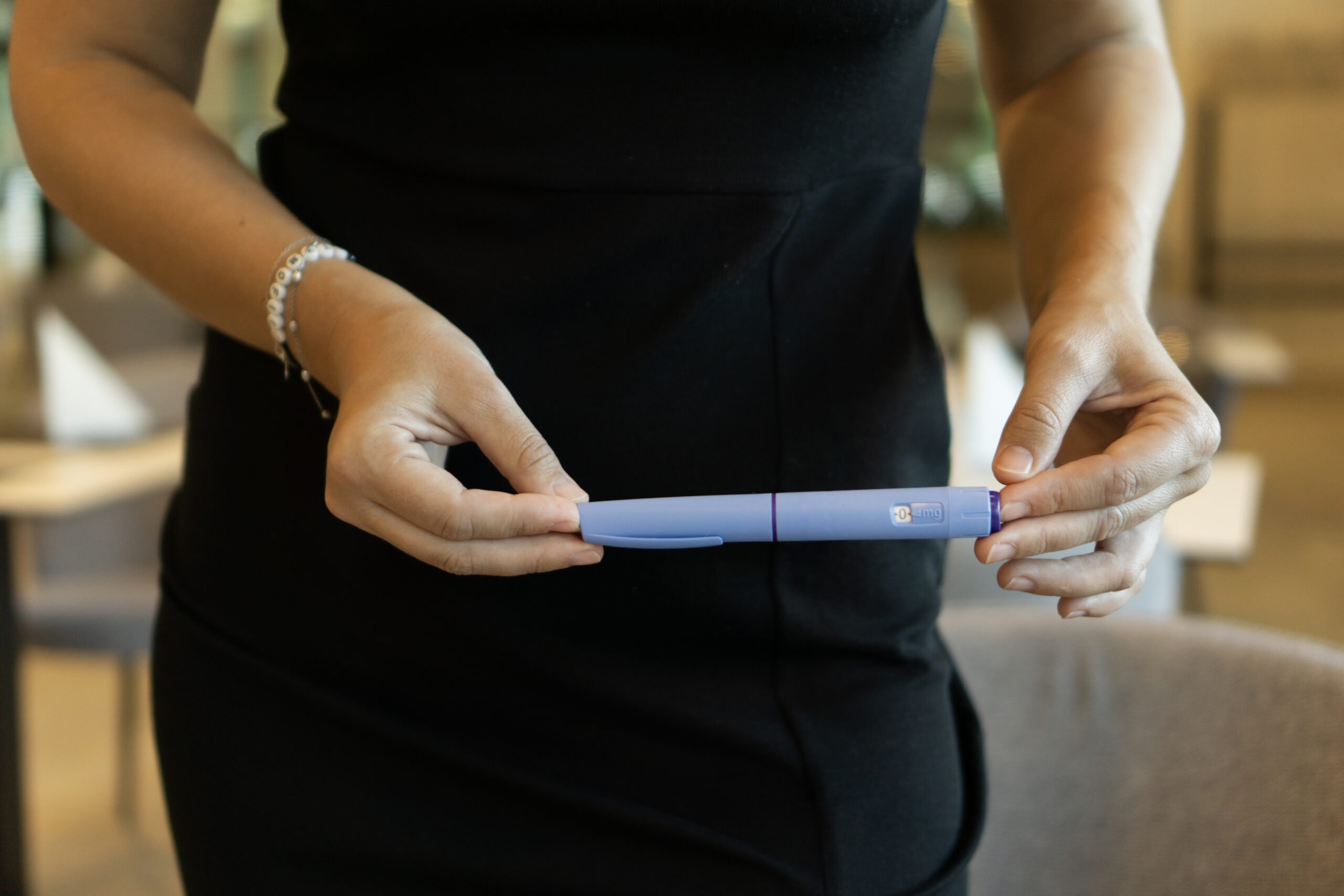
Competition in the obesity treatment market grows as medicine company Eli Lilly’s investigational drug retatrutide moves closer to FDA submission.
Eli Lilly’s recently unveiled Phase 3 data showing its experimental therapy drug retatrutide produced weight loss nearing levels associated with bariatric surgery, which is the gold standard operation for severe obesity. The positive results suggest the obesity drug market may soon host a new treatment option for patients.
More than 45% of patients on the highest dose of retatrutide achieved at least 30% weight loss within 104 Weeks, amounting to about 85 pounds lost from their starting weight.
On average, those on the highest dose saw a reduction in 28.3% of body weight over the course of 80 weeks, equating to approximately 70.3 pounds lost.
The Obesity Market Is Evolving
In addition to the new weight loss drugs on the market, telehealth use for obesity is continuing to rise. FAIR health’s national tracker lists it as a top-five diagnostic category for virtual visits.
Pharmaceutical manufacturers are racing to advance their pipelines to fill the surging demand for weight loss drugs. Novo Nordisk’s Wegovy and Eli Lilly’s Zepbound have largely defined the commercial success of obesity drugs. The two injectable medicines transformed obesity treatment into one of the fastest growing billion dollar pharmaceutical markets.
Analysts now estimate the global obesity drug market sales could exceed $100 billion annually over the next decade.
As the market saturates, drug makers are focusing on new modes, efficacy and safety profile. This includes oral alternatives, injections, better patient tolerability and treatments that can preserve muscle mass alongside scale weight.
New GLP-1 And Weight Loss Treatment Options Are On The Horizon
Retatrutide may be one of the highest profile late-stage obesity drug candidates, but it is far from alone. A growing number of pharmaceutical companies are advancing obesity therapies through Phase 3 programs or preparing for pivotal trials.
Clinical trials for weight loss drugs measure outcomes as a percentage of body weight to standardize results and allow comparison of clinical efficacy across patients of different sizes. Still, many investigational treatments have struggled to match the weight loss results achieved by current market leaders.
As a result, attention and investment have become increasingly concentrated around GLP-1s and related mechanisms.
Novo Nordisk
Novo Nordisk found major commercial success with Ozempic and Wegovy. The company is now advancing next-generation incretin therapies beyond semaglutide. Investigational therapies zenagamtide and CagriSema are among the leading candidates in its metabolic disease pipeline.
CagriSema is a once-weekly combination of semaglutide and cagrilintide designed to target both the GLP-1 and amylin pathways. The therapy is currently in late-stage Phase 3 clinical development for obesity and type 2 diabetes.
The company is investigating Zenagamtide, a dual GLP-1 and amylin receptor agonist, in separate programs for type 2 diabetes and obesity. The company recently reported positive Phase 2 trial data.
In patients with type 2 diabetes, the 40 mg dose produced up to 14.6% weight loss by week 36. Patients with a baseline weight of 218.7 pounds saw approximately 32 pounds of weight loss over 36 weeks.
The treatment also improved glycemic control, with up to 89.1% of participants achieving an A1C below 7%.
Amgen
Amgen’s lead investigational obesity drug is MariTide, also called maridebart cafraglutide. The manufacturer designed the antibody-peptide conjugate to activate GLP-1 receptors while inhibiting GIP receptors. This unique mechanism differentiates it from current market leaders Wegovy and Zepbound, which stimulate both GLP-1 and GIP pathways.
Amgen is positioning the drug as a convenient long-acting alternative administered monthly or every few months. If approved, it would be the obesity treatment with few fewest doses and maintenance.
Following positive Phase 2 trial data, the drug advanced to late clinical development. Obese and overweight patients taking the drug had an average of 20% reduction in weight by 52 weeks.
Roche
Roche entered the obesity market through its $2.7 billion acquisition of Carmot Therapeutics, gaining control of several incretin-based drug candidates, including CT-388.
CT-388 is a once-weekly dual GLP-1/GIP receptor agonist designed to target pathways involved in appetite regulation and glucose metabolism. Roche is currently advancing the investigational therapy into Phase 3 clinical development.
In a Phase 2 study, patients treated with CT-388 achieved up to 22.5% weight loss on the highest dose by 48 weeks. The drug is also being evaluated in separate programs for obesity, type 2 diabetes, and other obesity-related comorbidities.
Boehringer Ingelheim and Zealand Pharma
Boehringer Ingelheim and Zealand Pharma have formed one of the most closely watched partnerships in the obesity and metabolic market. They are jointly developing survodutide, a once-weekly dual GLP-1/glucagon receptor agonist injection.
Survodutide is in Phase 3 clinical development for obesity and related metabolic conditions. In recent company data, patients achieved up to 16.6% (39.8 pounds from baseline) body weight reduction over 76 weeks. The therapy has also demonstrated notable effects on liver and visceral fat, reflecting its glucagon receptor activity
Trial results showed a 34% reduction in visceral fat and a 63.1% reduction in liver fat, with two-thirds of patients with liver disease achieving normalization of fat levels. However, 19% of patients on the highest dose discontinued treatment due to gastrointestinal adverse events, including nausea, vomiting and diarrhea.
Viking Therapeutics
Viking Therapeutics is a clinical-stage biopharmaceutical company focused on metabolic and endocrine disorders. The company is advancing VK2735 as its lead obesity candidate into Phase 3 trial.
VK2735a is a dual GLP-1/GIP receptor agonist designed to improve weight loss and metabolic control. It is being formulated in both oral and subcutaneous formulations, reflecting the demand for multiple delivery options.
In a Phase 2 study, patients receiving VK2735 achieved a 12.2% reduction in body weight, or approximately 26.6 pounds, over 13 weeks.
Structure Therapeutics
Structure Therapeutics is a clinical-stage biopharmaceutical company focused on developing oral therapies for obesity and metabolic diseases.
The company’s is developing aleniglipron, an investigational once-daily oral GLP-1 receptor agonist advancing toward late-stage Phase 3 development.
In Phase 2 studies, aleniglipron demonstrated placebo-adjusted weight loss of 14.7% to 16.3% at 44 weeks at doses ranging from 120 mg to 240 mg. An open-label extension study showed sustained weight loss of approximately 16.2% at 56 weeks, positioning it among the more competitive oral GLP-1 candidates in late-stage development.
Altimmune
Altimmune is developing pemvidutide, an investigational once-weekly injection that acts as a GLP-1 and glucagon dual receptor agonist.
Similar to survodutide, the clinical-stage biopharmaceutical company designed its drug to target both weight loss and metabolic liver disease. The FDA granted the program Breakthrough Therapy Designation based on its potential to address significant unmet needs in progressive liver disease.
In its Phase 2 study, patients on the highest dose of 2.4 mg saw an average weight loss of 15.6% over 48 weeks. Phase 3 is currently underway.
Weight Loss Treatment Is Expanding From Shortage to Competition
The success of GLP-1 medicines is slowly creating market conditions that may eventually compress profits, a pattern previously seen in the rheumatoid arthritis market.
For the past few years, demand for weight-loss drugs has dramatically exceeded supply. That imbalance created shortages, strong manufacturer pricing power and the rise of compounding pharmacies filling gaps in access.
Direct-to-consumer and telehealth models continue to expand access and profits. However, employer plans and traditional insurance channels still drive most prescribing volume.
As more Phase 2 and Phase 3 drugs move toward approval, those dynamics are expected to shift. Competitive conditions will likely push manufacturers to compete more aggressively on price and rebates, especially as insurers and pharmacy benefit managers expand step-therapy requirements to contain costs.
For physicians, the pipeline churn adds complexity.
While telehealth platforms have expanded access, in-person physician visits still account for most metabolic prescribing. As the market expands quickly, clinicians may see an increase in more complex patients seeking in-person consults.
Obesity care is expected to become more individualized with the growing number of therapeutic options. Technology may offer crucial support in tracking the growing number of therapies and evolving clinical profiles in real time.
In parallel, metabolic profiles of each drug will increasingly be a key factor as clinicians increasingly need to match comorbidities such as sleep apnea, liver disease, and cardiovascular risk to each approved therapy.